New Orleans has inspired generations of artists because it is a city where history, music, visual culture, storytelling, and tradition rarely exist separately. For Ken Mask, MD, that environment has become an important part of a creative career that now reaches far beyond Louisiana. Mask is a board-certified diagnostic radiologist and Fellow of the American College of Radiology, but outside medicine he has established himself across filmmaking, writing, visual art, children's education, game development, and literacy advocacy. His projects have reached film festivals and art audiences from New Orleans to Cannes, the Hamptons, the Côte d'Azur, and other parts of Europe.
Mask's connection to New Orleans is particularly visible through his filmmaking. Rather than using the city simply as scenery, he has drawn from its history and cultural character to create stories with a distinct sense of place. Scandalous Moves, released in 2019, uses 1850s New Orleans as the setting for a story involving Paul Morphy, one of history's greatest chess minds. The film ultimately earned the Filmmaker's Choice Award at the San Diego Black Film Festival, bringing wider recognition to a project that connected the city's history with Mask's longstanding interest in chess.
Chess has become one of the defining subjects within his creative catalog because Mask sees possibilities in the game that extend beyond competition. Strategy requires players to anticipate consequences, understand relationships between individual moves, remain patient, and adjust when circumstances change. Those concepts translate naturally into education and personal development, which helps explain why Mask has returned to chess across multiple formats rather than treating Scandalous Moves as a standalone exploration.
His 2023 documentary Building Minds with Chess shifted the focus from historical storytelling to children's development. The project examines the cognitive and social benefits associated with introducing children to chess, using a grandmaster as a guide while presenting the game as an educational tool. The documentary received Official Selection recognition at the New Orleans Film Festival and the Diversity in Cannes Short Film Showcase in Cannes, France, allowing a project connected to youth education to enter an international film environment.
The recognition in Cannes represents only one part of Mask's broader filmmaking story. His catalog spans more than a dozen projects and includes Hoghead Harris Plays the Blues, Interview for a Wife, Chess: The Quiet War, The Praying Grandma, Henson, JC 44 BC, The Diary of Maria Gonzalez, and Mansa Musa. The range of subjects reveals a filmmaker unwilling to remain confined to the theme that brought recognition to earlier projects. Historical stories, cultural narratives, family-oriented work, and more dramatic concepts all occupy space within the same expanding catalog.
One of the projects currently extending that range is The Ghost Witch of Bayou Noir, a developing gothic thriller. The concept offers Mask an opportunity to explore a darker storytelling atmosphere while remaining connected to the Louisiana environment that has influenced much of his creative imagination. Moving from chess history and educational documentaries into gothic storytelling may seem like a dramatic shift, but within Mask's larger career it follows an established pattern. He consistently moves toward ideas that interest him rather than allowing genre expectations to determine what he is permitted to create.
That same creative freedom exists in his work as a visual artist. Mask creates across jazz abstraction and portraiture, bringing the improvisational energy associated with music into a visual medium. His Faceless Genius series reimagines musical figures including Beethoven, Mozart, Johann Sebastian Bach, and Michael Jackson without depending on conventional facial portraiture. Instead, bold strokes, color, motion, and abstraction become tools for exploring the emotional presence associated with each subject.
The concept behind Faceless Genius raises an interesting question about the way audiences understand iconic figures. Famous musicians are often reduced to instantly recognizable photographs or images, but Mask removes that familiar point of reference. The viewer must engage with movement, color, and feeling rather than simply identifying a face. In doing so, the series becomes less about reproducing celebrity imagery and more about interpreting what creative genius might look like when translated into abstraction.
Mask's artwork has also developed an international presence. In partnership with curator Gatsby Randolph, his paintings have been exhibited at Duck Walk Vineyards in the Hamptons through the From Harlem to the Hamptons show. His work has also appeared through private exhibitions along the Côte d'Azur and elsewhere in Europe, expanding the geographic reach of an artistic practice still deeply influenced by jazz, music, and the creative energy associated with New Orleans.
The relationship between music and visual art is especially fitting within Mask's catalog because improvisation appears to be one of the recurring qualities of his career. Jazz musicians work from an understanding of structure but create freedom inside it, and Mask has followed a comparable approach professionally. His medical career provides one highly structured environment, while his artistic projects give him room to explore questions that cannot necessarily be answered through science alone. The two identities do not have to compete because they satisfy different parts of the same intellectual curiosity.
His educational background further supports that combination. Mask earned undergraduate honors in Philosophy from UNC Chapel Hill before attending Duke University School of Medicine. Philosophy, medicine, film, and painting may seem like entirely different disciplines, but each requires observation and interpretation. Whether analyzing an image, constructing a narrative, considering an abstract idea, or deciding what a painting should communicate, Mask's work consistently returns to the process of looking closely and discovering what might exist beneath the obvious surface.
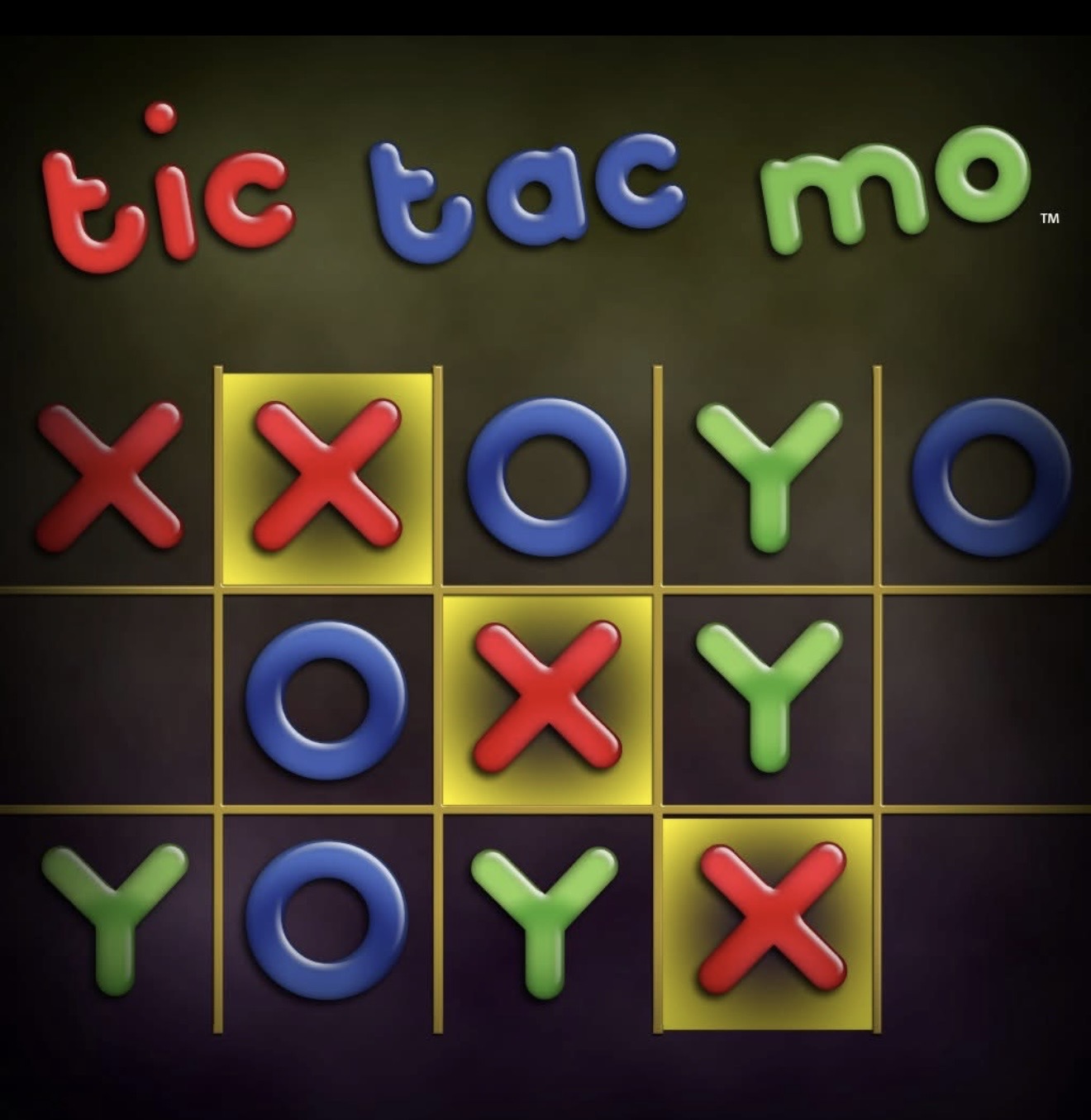
That curiosity also extends into children's projects and technology. Tic Tac Mo, Mask's three-player reinvention of tic-tac-toe, originated after his son Joshua asked why his sister Kenya could not join a traditional two-player game. Rather than treating the rule as permanent, Mask developed a version that introduced a third player represented by Y. The Griffin the Dragon children's series similarly grew from family life after Joshua won and named a stuffed dragon, eventually becoming a collection co-authored with Joshua and Kenya that explores subjects such as chess, healthy eating, and dealing with bullying.
Those family-centered projects help reveal why Mask's creative work should not be viewed simply as an attempt to accumulate accomplishments across different industries. Many of his ideas are connected to experiences, relationships, and questions that carry personal meaning. His children's work reflects fatherhood, his chess films combine education and strategy, his paintings draw from music, and his New Orleans projects reflect the cultural environment around him. The medium changes, but there is usually a recognizable reason behind the work.
His nonprofit Books To You provides another example of that connection between creative interests and tangible action. By distributing books to children in New Orleans, the organization supports literacy beyond the stories Mask creates himself. The work reinforces a larger belief found throughout his children's projects: access to books, games, and educational experiences can help young people develop imagination and critical-thinking skills that extend beyond the classroom.
Mask's creative reach may now include Cannes, the Hamptons, and the Côte d'Azur, but the foundation remains deeply connected to the ideas that have followed him across his life. Family continues to inspire projects, chess continues to provide a language for strategy and education, and New Orleans continues to influence the stories and artistic atmosphere surrounding his work. International exposure has expanded the audience, but it has not erased the local and personal roots from which much of the work emerged.
In many ways, Ken Mask's career demonstrates that being multidisciplinary does not have to mean being disconnected. Film, painting, literature, medicine, technology, and education become different tools for exploring a consistent set of interests. As his films continue reaching festivals, his artwork moves through international exhibitions, and new projects such as The Ghost Witch of Bayou Noir develop, Mask is continuing to build a creative catalog that refuses easy categorization. The result is not simply a physician with artistic hobbies, but a creator whose work has increasingly established its own identity across multiple cultural spaces.
Connect With Ken Mask, MD
Main Website: https://kenmask.com
Ken Mask Studios: https://kenmaskstudios.com
Tic Tac Mo: https://tictacmo.com
IMDb: https://imdb.com/name/nm5157841
Instagram: https://instagram.com/kenmaskmd
Facebook: https://facebook.com/ken.mask.1
LinkedIn: https://linkedin.com/in/ken-mask-md-8346484
Books: https://amazon.com — Search "Ken Mask"
Films: https://vyretv.com — Search "Scandalous Moves"